CONCEPT
Ecoprovence takes a holistic approach
Ecoprovence stand for an ecological lifestyle that encompasses all areas: self-sufficiency, as far as possible, in the areas of food and energy; mobility with electric vehicles (car and e-bikes).
Utilizing solar energy for electricity
In 2018, 12 m² of photovoltaic modules were installed on the roof of the eco-holiday home Ecoprovence to generate electricity. Surplus electricity that is not used in the house can be fed into the grid and compensated. A 40 m² area of photovoltaic modules was already installed on the private house in 2014. The plant generates approximately 13,000 kWh per year, about five times its own consumption. Peak output is almost 9 kW per hour.
We also recently purchased plug-and-play “balcony power plants” for both houses. These consist of four photovoltaic modules each, which are directly connected to the house’s electrical grid. Each system is equipped with a 4 kWh battery. This allows us to use some of the daily production in the evenings or on cloudy days. Furthermore, in the event of a power outage, there is a degree of autonomy thanks to the battery-powered outlets. This allows us in case of power cuts to directly connect essential appliances such as the PC, telephone system, and refrigerator.
Solar hot water for shower and dishwasher
The holiday home has 6 m² of special solar collectors installed and connected to a 300-liter water heater. The private house has 10 m² of solar collectors installed, which heat a 1000-liter tank. In addition to supplying hot water to the sinks, dishwasher, and washing machine, it is also connected to underfloor heating.
This hot water supplies the bathrooms, the kitchen (including the washing machine and dishwasher), and also serves as supplementary heating for the house.
Heating
Heating in the holiday home is provided by a heat pump and a wood-burning stove in the living room. The wood comes directly from the property. Cozy wood-burning stove in the living room The wood from the property serves as a fuel source for an ecological and renewable approach.
Enjoy the comforting radiant heat of the wood-burning stove with its glass door during your winter vacation.
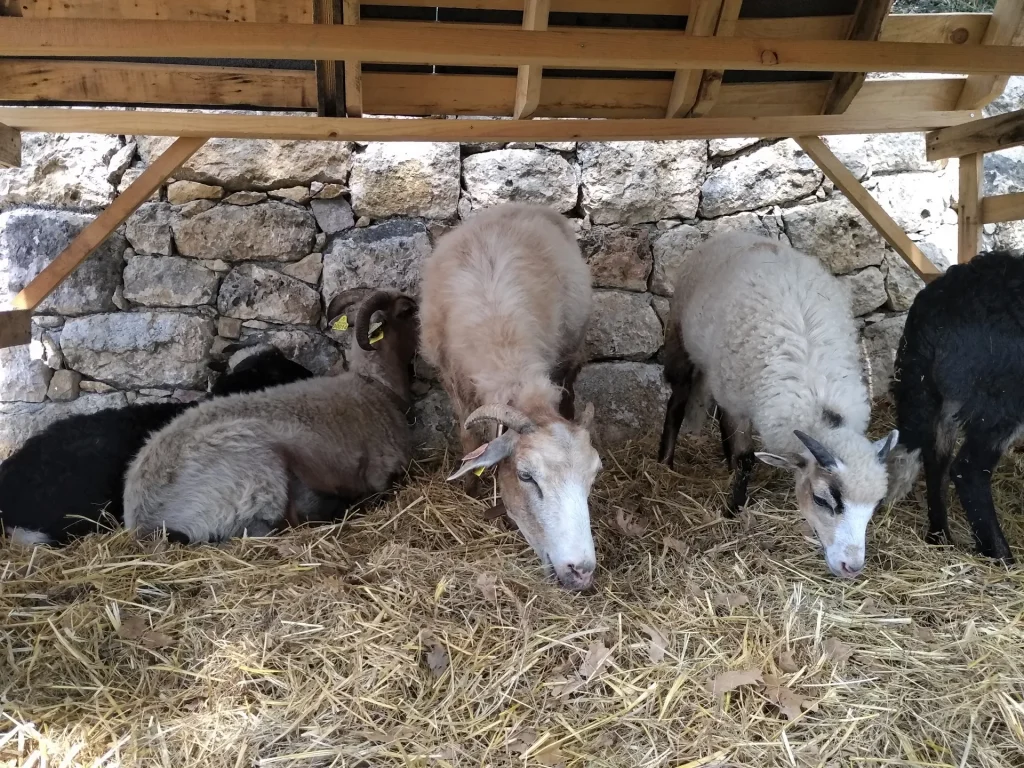
Domestic and Farm Animals
We have five sheep, seven chickens, and two cats. Several of the animals are tame and can be petted—even by our guests. This allows families interested in animals to have direct contact with them. We also sometimes have lambs, which are very cute. Some of the chickens can be held in your arms.
Organic Vegetable Garden and Fruit Trees
The heart of the Ecoprovence garden is the vegetable garden—for our own needs and to supplement our production with fruit, eggs, and milk. The organic vegetable growing area covers approximately 400 square meters. Soil cultivation is done primarily by hand, though a small tractor is sometimes used. For fruit, we rely on about a dozen apricot trees, as well as fig and persimmon trees, for our own use. However, we do not sell any fruit or vegetables.
Summer and winter vegetables alternate in the crop rotation. This crop rotation also includes green manure areas where alfalfa, phacelia (a bee pasture), or mustard complement each other and improve the soil.
Tomatoes, lettuce, herbs, peppers, zucchini, pumpkins, eggplants, artichokes, leeks and garlic, onions, beans, dill, and basil—to name just the most important vegetables and herbs that are regularly grown for personal consumption.
In winter, various types of cabbage, broccoli, lettuce, fennel, beets, onions, and peas thrive. A dozen fruit trees, such as apricot, plum, and greengage trees (reineclaude), as well as around ten citrus trees—orange, grapefruit, clementine, and lemon trees—have been planted in recent years. Large fig trees and a persimmon tree, which were planted long ago, also provide fresh fruit with great regularity.